How to Optimize Your SEO for AI-Powered Searches in 2025
Hi there! If you’ve made it this far, it’s because you know the world of SEO is changing at breakneck speed. Artificial intelligence (AI) is revolutionizing how we search for information, and 2025 will be a key year to adapt to this new reality. At Palo Seco Strategy, we’ve spent a long time helping companies across Spain rank on Google, and today we want to share a complete guide with you so that your website not only survives but thrives in the era of AI-powered searches. Are you in for this journey? Let’s get to it!
What’s changing with AI in searches?
Picture this: a few years ago, searching for something on Google meant typing a few keywords, skimming the first results, and clicking a link. Today, with tools like Google Search Generative Experience (SGE), ChatGPT, or even the evolution of assistants like Alexa, things are different. AI doesn’t just give you links; it generates complete answers in real time. Searching for “best paella in Valencia”? Instead of a list, you might see an AI-generated paragraph with direct recommendations.
In Spain, this has a huge impact. We’re a country where local SEO rules, especially for brick-and-mortar businesses like stores, restaurants, or clinics. Searches like “near me” or “in Barcelona” are everyday occurrences, and AI is learning to interpret them with almost human precision. But that’s not all: it also affects digital sectors like ecommerce or blogs, where competition to appear in the top results is fierce.
Why does this matter in 2025?
Google has spent years focusing on user experience. From the arrival of Core Web Vitals to its “helpful content” mantra, the search engine has made it clear that it wants to reward websites that truly add value. Now, with AI at center stage, this intensifies. In 2025, algorithms will be even more sophisticated at understanding the intent behind every search, whether it’s informational (“what is SEO?”), transactional (“buy sneakers online”), or navigational (“Palo Seco website”).
If your website isn’t ready, you could fall behind. But don’t stress: with the right adjustments, you can turn this change into an opportunity. Let’s break it down step by step.
The impact of AI on the SERPs
The SERPs (search results pages) are no longer just a list of blue links. We now see featured snippets, knowledge panels, generated answers, and even interactive maps. AI is behind this, selecting content that answers quickly and well. For example, if you search “how to do SEO in 2025,” you might see an answer generated right at the top, pulled from a blog like ours. The question is: how do you make that answer yours?
Key strategies to optimize your SEO with AI
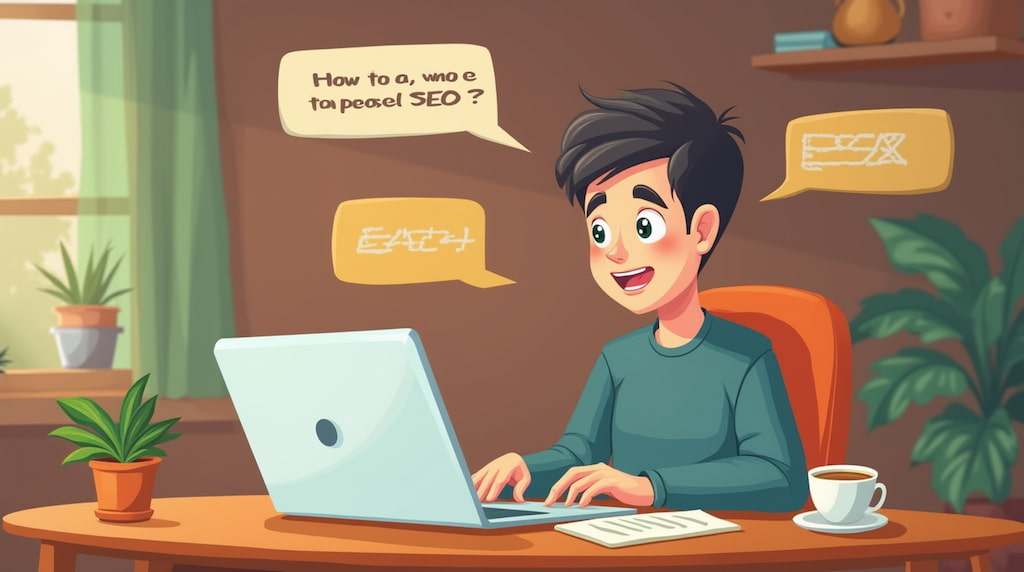
You don’t need to be a tech expert to take advantage of this. At Palo Seco, our approach is practical and straightforward, and these strategies are designed for you to apply today, whether on your own or with a little help from our SEO on Google team. Here are the keys:
1. Create content that directly answers questions
AI loves content that gets to the point. Users no longer want to read endless paragraphs to find a solution; they’re looking for quick answers. That’s why one of the best ways to optimize your SEO is to focus on what people ask.
How do you do it?
Think like your audience. If you have an online store, they might ask: “How do I choose the right size online?” or “How long does shipping to Madrid take?”. If you’re an agency like us, the questions might be: “What makes an effective SEO methodology?” or “How do I improve my ranking on Google Maps?”. Your job is to answer those questions clearly and helpfully.
- Practical tip: Use a question-and-answer format. For example, add an FAQ section at the end of your pages or posts. This not only helps AI understand your content but also improves the user experience.
- Long-tail keywords: Forget generic terms like “SEO.” Aim for specific phrases like “how to rank my website on Google without spending much” or “best SEO strategy for SMEs in 2025.” These are the ones AI tends to prioritize in conversational answers.
A real example
Imagine you have a recipe blog. A post like “How to make the perfect Spanish omelette” with a numbered list, tips, and an FAQ (“Can I use frozen potatoes?”) is more likely to appear in an AI-generated answer than a dense text with no structure.
2. Bet on structured data
If structured data isn’t on your radar, 2025 is the time to put it there. This code (also called schema markup) tells Google exactly what your content is: a recipe, a product, an event, a review, etc. For AI, it’s like a guide that makes it easier to select and display your information.
Why is it key?
AI relies on clear data to generate answers. If your website uses schemas, you have more chances of appearing in rich results (like rating stars or prices) or directly in generated answers.
- How to start: Use free tools like Google’s Schema Generator or plugins like Yoast SEO for WordPress. Implement basic schemas like “FAQPage” for frequently asked questions, “HowTo” for step-by-step guides, or “LocalBusiness” if you have a physical business.
- Practical example: In local SEO, adding a “LocalBusiness” schema with your address, hours, and phone number can get Google Maps to place you in the top 3 of the “local pack.”
Extra tip
Check whether your competitors use it (with tools like Merkle Schema Markup Generator) and make sure to go one step further. For example, if you sell products, combine “Product” with “Review” to show ratings directly in the results.
3. Strengthen your authority with link building

AI doesn’t just look at your website’s content, but also at how much others trust you. This is where link building remains a pillar of SEO, even in 2025. A good link profile positions you as an authority in your sector, and that’s gold for the algorithms.
The magic of Beelinko
At Palo Seco, we’ve created Beelinko, our own tool for getting quality links. It’s not about filling your website with just any links, but about connecting with relevant sites that reinforce your credibility.
- Strategy: Look for blogs, media, or directories in your niche. For example, if you have a sustainable clothing store, a link from an ethical fashion blog is worth more than ten from generic sites.
- Watch out for the traps: AI is getting better and better at detecting practices like link farms or irrelevant links. Quality over quantity.
Success story
We recently helped a client in the tourism sector boost their organic traffic by 40% in 6 months. How? By getting links from travel blogs and local guides, all managed with Beelinko. Google’s AI recognized their authority, and their website started appearing in quick answers like “best hotels in Seville.”
4. Optimize the technical experience
It doesn’t matter how good your content is if your website loads slowly or looks bad on mobile. The technical experience is a critical factor in 2025, and AI takes it very much into account when deciding what to recommend.
Core Web Vitals and more
Core Web Vitals (loading speed, interactivity, and visual stability) are a must. But don’t stop there: make sure your website is mobile-first, has intuitive navigation, and is free of 404 errors.
- How to check it: Use Google Search Console or PageSpeed Insights. If you see that your LCP (Largest Contentful Paint) exceeds 2.5 seconds, it’s time to optimize images or reduce unnecessary code.
- Our help: In our SEO on Google services, we do complete technical audits so you don’t have to worry about this.
Practical example
One of our clients, a dental clinic in Barcelona, had a beautiful but slow website. After optimizing it (compressed images, improved hosting, and clean CSS), their loading time dropped from 5 to 1.8 seconds. The result: 25% more online appointments in 3 months.
Case study: an example made in Palo Seco

Let’s set the scene. You have an online sustainable clothing store in Madrid and want to stand out in 2025. Before, with good keywords like “sustainable clothing Madrid” and a bit of patience, you’d show up on the first page. Now, AI answers directly: “The best sustainable clothing stores in Madrid are X, Y, and Z.” How do you sneak in there?
Step by step
- Strategic content: You publish a post titled “The definitive guide to sustainable fashion in Madrid.” You include an attractive intro, a list of tips (e.g., “how to identify eco-friendly fabrics”), and an FAQ (“Where can I buy cheap sustainable clothing in Madrid?”).
- Structured data: You add “Article” and “FAQPage” schemas to the post, and “LocalBusiness” to your contact page with your address and hours.
- Link building: You get links from a sustainable fashion blog and a local Madrid guide using Beelinko.
- Technical optimization: You reduce your website’s loading time to under 2 seconds and make sure it works perfectly on mobile.
Results
In 6 months, your organic traffic rises by 35%, your products appear in rich results, and best of all, AI starts mentioning you in quick answers. This isn’t magic, it’s a well-executed strategy.
Conclusion: Get ready today for tomorrow’s SEO
SEO in 2025 is a new game, but the rules aren’t that complicated once you understand them. AI is here to stay, and optimizing your website for its searches will not only keep you visible but also give you an edge over those who stay anchored in the past. At Palo Seco, we’re passionate about helping businesses like yours shine on Google, whether with local SEO, link building or a tailor-made strategy.
Ready to take the leap? Write to us, let’s chat and see how to take your website to the next level. The future of SEO starts today, and we want you in the front row!